
This May is Domestic Violence Prevention Month, and today (May 11th) is Are You Safe at Home Day. Now, more than ever, is a great time to start the conversation of how we can collectively work to end family violence.
Check on your friends, family, and colleagues
If you suspect someone is not safe at home, ask the question – “Are you safe at home?”
It’s important to ask this question in the right circumstances. Wait until you have an opportunity to speak with the person alone and in an environment that’s safe for both of you, approaching the conversation sensitively and empathetically.
They might not be ready to talk about it, so it’s important to be patient and let them know you’re there if they need to talk.
It takes strength and courage to tell someone about violence or abuse experienced. If someone opens up to you, it’s important that you listen without interruption, believe them, and take the abuse seriously.
Conversation Guide
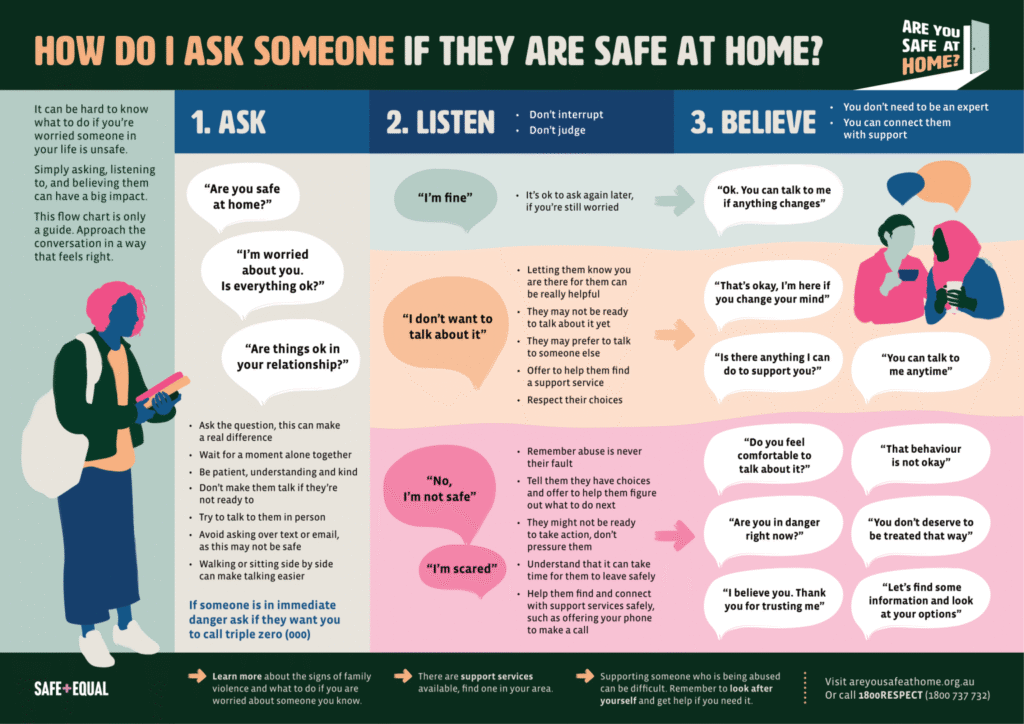
It can be hard to know what to do if you’re worried about the safety of someone in your life.
Here’s a flow chart that can provide some guidance on how to respond – of course, you should also approach the conversation in a way that feels right to you.
Are you safe at home?
It’s important to get help if you are experiencing family violence.
Reaching out for help can seem like a big step to take, but there are people and services ready to help you. Everyone deserves to be safe, respected, and valued in all relationships, and no matter what form it takes — family violence is never acceptable.
Refuge Victoria accepts referrals through Safe Steps. If you are in Victoria and are experiencing family violence, please contact Safe Steps at 1800 015 188, or via email [email protected]
As well as finding and contacting a support service, there are other things you can think about doing to help keep yourself safe. These could include:
- Make a safety plan: The best way to make a safety plan is with the help of a specialist family violence service. A safety plan will help you think about practical things you can do to help keep you and your family safe.
- Talk to someone you trust: It might help to confide in someone you trust about what you’re going through. This could be your GP, counsellor or teacher.
- Document the abuse: It can be useful to keep a record of someone’s behaviour that makes you feel threatened or afraid. This will help you explain to other people, support services, the police, or in court. There are tools available that can help you document the abuse, including the Arc app which you can use to record your story safely on your smartphone.
- Apply for an intervention order: A Family Violence Intervention Order (or FIVO) is a legal order issued by a court to protect you and your children from someone’s abusive behaviour. You can apply for a FIVO online or call your nearest court to discuss other ways to apply. You can also ask a specialist family violence or legal service for help with your application.
- Seek legal advice: Legal services can help you understand what the law says about the violence, your relationship, seperation, custody of your children, money and property. They can help you take out an IVO, or make safe arrangements for your children.
- Access financial support: If you’re finding it hard to make ends meet, you might be able to access financial support through Centrelink. To learn more and find out if you meet the crisis payment eligibility criteria, check out the Centrelink website or call 132 850.
Additional Resources
Click HERE to complete Safe and Equal’s eLearn module. This 20-minute eLearn resource is for anyone who wants to learn more about how to have a safe and respectful conversations about family violence, including in the workplace.
Check out the Are You Safe at Home Day Website for more information on how you can support those experiencing family violence, and where you can access support services.